Tuesday, October 11, 2011

2011 McLaren MP4-12C Review

McLaren Automotive is in the final stages of developing a number of sports cars innovative, high performance, it will also be very effective, high quality, lightweight, practical, dynamic, safe, comfortable and visually captivating. Monday, January 17, 2011 came the first production car in the McLaren MP4-12C McLaren Technology Centre (MTC), the General Assembly Hall in Woking, England.
2011 McLaren MP4-12C 

Twenty years of sports car design and production, combined with inspiring success in Formula 1, driven by Ron Dennis, McLaren Automotive is the President announced his plans for the final line-up of technology-driven and customer-focused performance car 21 century . Rules for the world of sports cars has been rewritten.

2011 McLaren MP4-12C
With a rich modern history, the Supercar McLaren's automotive division has built the world's most critically acclaimed, the McLaren F1 (1993-1998) and luxury in the best-seller in the world supercar, the Mercedes-Benz SLR McLaren (2003 - 2009). McLaren Automotive is now looking to the future with a new range of revolutionary sports car.

"It's a lifelong dream to launch a series of high-performance sports cars that set new standards in the industry," said Dennis.

"We started to design and build cars for sports car lovers of pure blood for almost 20 years. Integrating technology and the McLaren Group has built its various companies, I think now we are perfectly situated to open this new chapter in history McLaren and play a role in the regeneration of high-tech manufacturing in the UK and the global automotive environment, "he said.

2011 McLaren MP4-12C


2011 McLaren MP4-12C


2011 McLaren MP4-12C


2011 McLaren MP4-12C

Friday, October 7, 2011

McLaren M6GT Review

The McLaren M6A was a racing driver Bruce McLaren and developed by his team of Bruce McLaren Motor Racing for entry into the 1967 Can-Am season. M1Bs to replace the team of 1966, an improved design of the McLaren M6A Chevrolet McLaren Bruce and his team won its first multiple Can-Am Championships. After McLaren M6A were replaced by the M8A in preparation for 1968, McLaren and partner developed the technique of Troy M6B which was sold to customers for use in Can-Am and other racing series.

McLaren M6GT

Name of M6 was subsequently used to develop closed-cockpit sports car for 24 hours of Le Mans, and is known for M6GT. The company's plan to approve the rules of the FIA ​​Group 4, however, was never completed, and only a few prototypes ready M6GT McLaren and Trojan horses. Two M6GTs then converted to road cars, one of whom was Bruce McLaren's personal transport.

Development

Bruce McLaren attended several designers to develop the McLaren M6A at the start of the season in 1967. With McLaren himself, Robin Herd, Coppuck Gordon, Tyler Alexander, Don Beresford and worked on the design of the McLaren M6A chassis and body. The car featured the monocoque chassis which was built by McLaren, while the body has been trained to increase downforce circuits adapted for the Can-Am. The McLaren team has also expanded in motor development, the creation of a fuel injection system for Chevrolet V8. Another addition to the team of a new tire supplier, Goodyear Firestone to replace, in exchange for a program of testing and development.
 McLaren M6GT

The first McLaren M6A was completed in the spring of 1967, and brought near to the Goodwood circuit testing. Bruce McLaren Motor Racing deployed more than 2,000 miles of testing the circuit in preparation for the future, Can-Am season, as well as tuning the car for the Goodyear data collection. Like two McLaren M6A was completed, the team handed car in North America to prepare for the season opening race. In addition to the final car was the paint orange jacket. The new orange color scheme would become synonymous with McLaren Bruce McLaren and the team.
 McLaren M6GT

When you retire the McLaren M6A given the Trojan horse for the construction of a duplicate of the McLaren, which could be sold to customers. These M6Bs was almost identical to the McLaren M6A, but sold without an engine. Several other M6Bs also adapt to a car cockpit closed.

The racing history

The Can-Am 1967 season began in September at Road America. Bruce McLaren M6A qualified in pole position with a new track record, while his teammate's car drove Denny Hulme once the race began. Although McLaren suffered an oil leak and could not finish, Hulme was able to win the first victory of the car. The next two events took the team away from the opposition, Hulme and McLaren finishing first and second in a row. However, the roles are exchanged over the next two races, as it was McLaren, who has won twice, but problems with Hulme's McLaren car has taken first place in points entering the final round. By the end of Stardust Grand Prix, issues with Chevrolet engines have led to car engines or wind and reach the goal. However, their performance during the season, Bruce McLaren said the 1967 Can-Am Challenge Cup, while Hulme was second only three points.
 McLaren M6GT

As Bruce McLaren Motor Racing was transferred to the development of M8A, M6Bs began to be delivered to customers during the year 1968. Many of McLaren M6A was sold to Roger Penske bought a car for defending the United States Road Racing Championship (USRRC) champion Mark Donohue. Donohue has won numerous events USRRC season and earned his second championship. Donohue also later won the race in the Can-Am, the player later M8As McLaren. After the cancellation of USRRC after 1968, and M6As M6Bs continues to be used as part of early 1970, but none of this has not been possible to reach the profit of their newer competitors.

McLaren M6GT

Sunday, July 3, 2011

2011 McLaren Sport Cars MP4-12C GT3 Racing Cars

2011 McLaren Sport Cars MP4-12C GT3 Racing Cars
Rookie luxury automobile designer and manufacturer, McLaren GT, unveiled the 2011 McLaren Sport Cars MP4-12C GT3 Racing Cars and plans to the high-performance sports car market and the supercar automobile arena for a 2011 development programme, a new race car manufacturer which brings together the expertise of McLaren Racing, McLaren Automotive and CRS Racing.
2011 McLaren Sport Cars MP4-12C GT3 Racing Cars
The new 2011 McLaren Sport Cars MP4-12C GT3 Racing Cars will be the first McLaren car built for FIA GT series racing since the McLaren F1 GTR finished production in 1997. The 2011 McLaren Sport Cars MP4-12C GT3 Racing Cars is based on the new MP4-12C high-performance sports car and a team of engineers, designers and test drivers with vast experience in Formula 1 and GT racing has been assembled to undertake the process of adapting the carbon chassis-based 12C to racing specification.
2011 McLaren Sport Cars MP4-12C GT3 Racing Cars
Emerging from a strategic tie-up with Mercedes-Benz that brought the limited production SLR McLaren sports cars between 2003-2009, McLaren GT has now developed its own flagship high-octane sports car scheduled to be launched in time for 2011 GT3 season—and rightfully so, given the long and illustrious race car pedigree quintessential to the McLaren brand. But the design, engineering and testing team at McLaren GT are not resting on their Laurels by keeping to their comprehensive development program so that the 2011 McLaren Sport Cars MP4-12C GT3 Racing Cars meets the discerning standards of the most formidable race car connoisseur.
2011 McLaren Sport Cars MP4-12C GT3 Racing Cars
Martin Whitmarsh, McLaren Group Chief Executive Officer said: "McLaren has racing in its blood and it was a natural step to take our MP4-12C road car and turn it into the most reliable, efficient and easy to drive GT3 car. Every car on the grid will have its performance balanced by race rules, meaning our objective must be to select a technical specification that ensures any driver is able to access the 12C GT3's performance limit with ease. "We have worked with CRS Racing to ensure the 12C's design and development programme is as close as possible to one McLaren Racing would employ in developing a Formula 1 car. The team at CRS is well qualified to shape decisions in this area as they have an outstanding record in racing GT3 cars, and understand what is required to be successful in that level of competitive motorsport.
2011 McLaren Sport Cars MP4-12C GT3 Racing Cars
"In return, McLaren Racing is able to bring new levels of technology to GT3 racing. No other GT3 car in 2012 will be supplied with a road-car carbon chassis, or a steering wheel and other associated technology from a Formula 1 car. "The 2011 McLaren Sport Cars MP4-12C GT3 Racing Cars will be supplied with the 12C's carbon MonoCell and the same steering wheel design employed by Lewis Hamilton in his MP4-24 Formula 1 car. Plus, we are working closely with Formula 1 suppliers past and present: Akebono, Mobil 1, McLaren Electronic Systems, Ricardo and Michelin for example. This blend of road car and Formula 1 technology and experience will be a great advantage to anyone racing a 12C GT3 in 2012."
2011 McLaren Sport Cars MP4-12C GT3 Racing Cars
The simple beauty of the McLaren MP4-12C supercar is romantically fitted for auto racing. Built around the same MonoCell chassis as the street version, the GT3 version of the 2011 McLaren Sport Cars MP4-12C GT3 Racing Cars utilizes the lightweight but enduring construction produced through Resin Transfer Molding. Doors to the race-purpose, driver-oriented interior proceeds to rise in the same majestic style as the exotic production car. With only minor aerodynamic additions under the GT3 category rules, the race-fitted MP4-12C exterior has been modified with exclusive carbon fiber pieces. A front splitter underneath special front fender louvers, rear diffuser and door blade are all unique touches to the 2011 McLaren Sport Cars MP4-12C GT3 Racing Cars.
2011 McLaren Sport Cars MP4-12C GT3 Racing Cars
Though the 2011 McLaren Sport Cars MP4-12C GT3 Racing Cars is already a tempting high-performance creation for the street, the vehicle vital mechanicals require an entire refitting to meet the rigors of auto racing. To best suit the GT3 class rules, engine power from the MP4-12C GT3’s energetic 3.8 liter twin-turbocharged powerplant has been reduced by almost 100 horsepower. Producing roughly 592 horsepower, engineers of the detuned 2011 McLaren Sport Cars MP4-12C GT3 Racing Cars are actually excited to see how the produced-based mechanics will perform in race competition.
2011 McLaren Sport Cars MP4-12C GT3 Racing Cars is a special 6-speed sequential transmission. Weighing 80 kilograms (just under 176.4 pounds) than the street version‘s 7-speed gearbox, the special sports car transmission is developed by the reputable hands of Ricardo. A diverse British-based engineering firm with history going back to 1927, Ricardo other contributions to motorsports includes co-development of the Xtrac used by Formula 1 teams. Completing the performance trim of the race car, Akebono-supplied brake calipers and Michelin tires are fitted to the McLaren MP4-12C GT3 supercar.
2011 McLaren Sport Cars MP4-12C GT3 Racing Cars
This performance-balanced light-weight race car is innovative in engineering design specs: 12 C GT3 (de-tuned to 500 PS providing maximum power) and a 3.8-liter twin turbochargers ‘M838T’ McLaren V8 engine (with a power output of up to 493 HP) defined by a TAG-400 self-contained compact engine system and data logger for race cars designed and produced by McLaren Electronic Systems. To date, initial demands for the first 20 McLaren GT3 units exceed earlier expectations. CRS Racing will build, sell and support the GT3 cars 12C in close collaboration with McLaren. Leicestershire-based racing team has a strong pedigree in GT racing in Le Mans Series, FIA GT Championship, the International GT Open and the British GT Championship. CRS also run two successful single-seater team: in Formula Renault UK Championship and as Atech CRS in Series GP3.

Thursday, June 3, 2010

Mercedes McLaren Sports Cars ASMA Design Perfectus SLR 722

ASMA Design have modded the Mercedes-Benz McLaren sports cars SLR 722 to their specifications. The new ASMA Design Perfectus SLR 722 is totally redone with new aggressive custom carbon fibre bodywork and 20-inch wheels.
Mercedes McLaren Sports Cars ASMA Design Perfectus SLR 722
The original SLR only made 650-hp from the 5.4-litre supercharged V8, but this was not enough for ASMA Design, as they have upped the power to 750-hp, and this allows the ASMA Design Perfectus SLR to get from 0-100km/h in only 3.5 seconds, and then go onto a top speed of 216mph.
Making claims of perfection is a dangerous thing to do, especially in the exclusive and demanding world of supercar tuning. But there is one man who can actually make this claim of perfection, and even go as far as to name his incredible automotive creation Perfectus. And this Designer is Erturul ASMA and this is his amazing, all carbon fiber ASMA Mercedes McLaren SLR 722.
Carbon is the customizing material of choice for hardcore tuners alike, but until the unveiling of Perfectus, no-one had truly used this most beautiful and powerful material to its full and awe-inspiring effect. But, as these stunning pictures can only prove, Erturul ASMA has taken the McLaren to entirely new levels of automotive theatre. In fact, thanks to Perfectus, you can forget about the world of top-end tuning here on Earth, and now, and only now, think in terms of an awesome new age of carbon customization.
Wide arch at over 2-metres in total width, with over 10cms of super-phat and super-sculpted carbon over each of the one-off ASMA rims, rims that are also mind-blowing in their dimensions. How does 325-25-20 out the back and 255-30-20 up front grab you? Hard! And once this stunning carbon design grabs you, it will never let you go.
The wide ‘n’ wild completely custom carbon fiber bodywork is simply unmatched and unbeatable, anywhere in the world. Sharp, extra-aggressive F1-inspired bodylines take this SLR to whole new levels of road-presence; this SLR is always in full attack mode, making 700hp to back-up the ASMA Design styling.
Only Erturul ASMA can make and prove his claims of perfection, but he must also apologize… apologize to all the owners of standard SLRs everywhere, for there can be only one Perfectus.

Mercedes-Benz McLaren Sports Cars SLR Stirling Moss

Bearing the namesake of legendary British racer Stirling Moss, the McLaren SLR Stirling Moss, will be making its big debut as the newest McLaren SLR variant amongst the automotive elite (and few entries from Kia) at the 38th Annual North American International Auto Show in Detroit this January.
Mercedes-Benz McLaren Sports Cars SLR Stirling Moss
Stuttgart– Mercedes-Benz and McLaren are adding the crowning glory to the model family of their highly successful SLR super sports car with a new, uncompromisingly spectacular car. There is neither a roof nor a windscreen to separate the driver and passenger from the outside world; they enjoy unadulterated high-speed excitement with all the attributes of a speedster.
The new SLR Stirling Moss is also characterised by the most sophisticated technology and a breathtaking design which reinterprets the SLR legend. With 478 kW/650 hp the SLR Stirling Moss accelerates its V8 supercharged engine from standstill to 100 km/h in less than 3.5 seconds, and has a top speed of 350 km/h – no other series-production car is at the same time so open and so fast.
This extreme concept makes the new high-performance sports car a legitimate bearer of the name of the British motor racing legend and Mille Miglia record-holder Stirling Moss, who drove the legendary Mercedes-Benz SLR racing cars from victory to victory during the 1950s.
A successful collaboration of engineering which is demonstrated far beyond the relatively ancillary exclusion of a windscreen, the SLR Stirling Moss is truly an equal celebration of McLaren’s both past and present. Thus in keeping with its status as a rare breed, production of the SLR Stirling Moss will be limited to only 75 units and, to further prevent your uncultured, peasant hands from touching it, each unit will be priced at a cool $1.04 million (€750,000).
This is why the modern-day version of the legendary SLR carries the additional words “Stirling Moss” in its name. As the new SLR Stirling Moss unites the character of the current SLR models with the fascination of the SLR of 1955. The core values of both the historical and the present-day SLR models include an exciting new design, innovative technology, high-class materials displaying perfect craftsmanship, and, above all: a unique driving experience for all the senses.
Whilst the 300 SLR earned its spurs on racing circuits the world over, the new member of the SLR family is not designed for the racetrack. Although it sets new standards in terms of technology, performance and excitement – just like its forebears – it is aimed at individuals who have exquisite requirements and nurture very special dreams.
Remaining totally true to the specifications of the 300 SLR, the new Silver Arrow’s equipment is extremely sophisticated and yet at the same time decidedly spartan, doing without both a roof and side windows. There are just two wind deflectors a couple of centimetres in height to protect the driver and passenger from the airflow. Two air scoops integrated into the bodywork serve as roll-over bars. With this extreme concept the new SLR Stirling Moss is visually very different from all the other vehicles which belong to the elite sports car class.
Just like the legendary racing vehicles of yesteryear, the SLR Stirling Moss dazzles with its superlative performance. Accelerating from zero to 100 km/h in less than 3.5 seconds and with a top speed of 350 km/h this puristic high-performance sports car denotes completely new dimensions in open-top driving. And not just because of the impressive performance figures; every time drivers take to the wheel of the SLR Stirling Moss their senses are addressed with a previously unheard of intensity, conveying a driving experience in its purest and most sensual form. This automotive thoroughbred thus facilitates the kind of open-air feeling that is utterly unique for a road-going vehicle.
Developers working on the Stirling Moss were able to fall back on a wealth of experience gathered when producing the SLR CoupĂ© and Roadster, in particular where the technical base was concerned, with its extravagant carbon-fibre design, high-performance suspension and throaty V8 engine. The common denominator uniting the Stirling Moss with the other members of the SLR family is the aerodynamic concept with a closed underbody and a diffuser in the rear bumper for maximum possible downforce at the rear axle – with one difference: the diffuser here is considerably larger than that on the coupĂ© and roadster.
The new SLR Stirling Moss is the kind of high-calibre speedster coveted by the sporting gentry and enthusiasts alike. At the same time it is a collector’s item which marks the pinnacle of an era and, for the foreseeable future, at least, the final curtain for the SLR. In May 2009 production of the SLR models will cease; only a total of 75 units of the Stirling Moss will be manufactured between June and December 2009, bearing chassis numbers from 1 to 75. Not only does this exclusive vehicle represent the conclusion of the current SLR family; it also serves as a very special thank you to the most loyal of SLR customers, for they are the only ones able to acquire a Stirling Moss.

Thursday, February 18, 2010

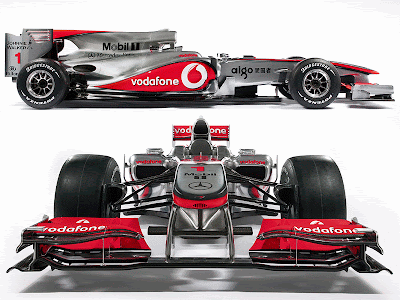
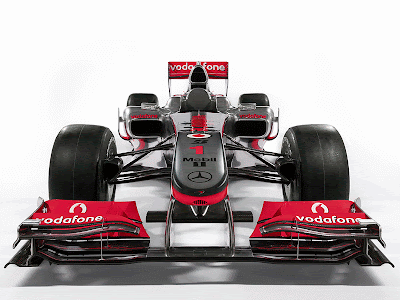
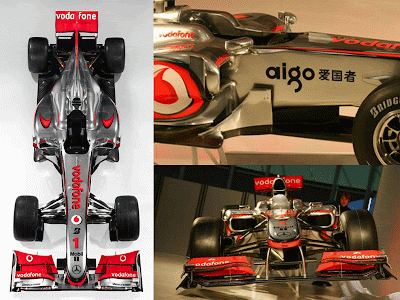
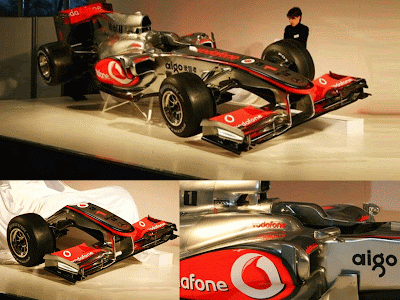
2010 McLaren MP4-25 Race Car

While yesterday was Ferrari's turn to present his car, McLaren did today. The team presented the MP4-25, the model that will run Lewis Hamilton and Jenson Button in the Formula 1 season starting on March 14 in Bahrain. The McLaren team that will be the last two world champions in Formula 1, Jenson Button and Lewis Hamilton. According to the company, the 'MP4-25', is a car that carries the British team has worked "more than ever" to tackle "an exciting year."
2010 McLaren MP4-25 Race Car   

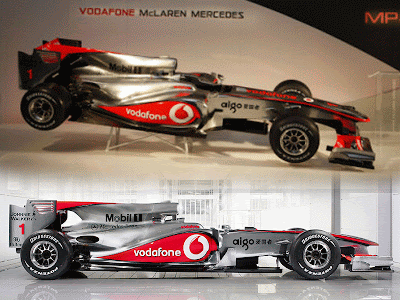
The McLaren Mercedes team launched its new car for the 2010 season on Friday morning, with the target of clinching both titles after a mixed campaign in 2009. The Mercedes-powered MP4-25 was unveiled at Vodafone UK's headquarters in Newbury. The Vodafone McLaren Mercedes team revealed its brand new MP4-25 chassis – the car in which reigning world champion Jenson Button and 2008 world champion Lewis Hamilton will contest the 2010 FIA Formula 1 World Championship.
2010 McLaren MP4-25 Race Car   

Unveiled at Vodafone UK’s stunning headquarters in Newbury, the 2010 car looks noticeably different from last year’s race-winning MP4-24. MP4-25 features a radical aerodynamic overhaul and a significantly larger fuel tank to take full advantage of this year’s new regulations, and its design team is confident it has explored every possible avenue to maximise the car’s performance.
2010 McLaren MP4-25 Race Car   

Horsepower once again comes from our friends in Stuttgart. Mercedes-Benz’s FO 108X V8 subtly improves upon an engine that has become the benchmark in Formula 1, winning the last two drivers’ world championships.
2010 McLaren MP4-25 Race Car   

The team kicks off its 2010 campaign with a stunning driver pairing: 2009 world champion Jenson Button and 2008 world champion Lewis Hamilton. It is the first time since 1989 – when it ran Alain Prost and Ayrton Senna – that the team has fielded a joint-world champion driver line-up, and marks the first time in Formula 1 history that the sport’s two most recent world champions have been partnered together.
2010 McLaren MP4-25 Race Car   

However, the driver line-up represents only a fraction of the team’s remarkable strength in depth. Members of the design team who contributed to the development of MP4-25 can also trace their involvement back through an incredible seven of the team’s 12 drivers’ world championships, five of the team’s eight constructors’ world championships and 112 of the team’s 164 grand prix victories.
The Vodafone McLaren Mercedes team begins pre-season testing with MP4-25 at the Circuit de la Comunitat Valenciana Ricardo Tormo on Monday.

Wednesday, November 25, 2009

2011 McLaren MP4-12C Super Sports Concept Car pure McLaren, Powered by a twin-turbocharged 3.8 litre, V8 Engine


2011 McLaren MP4-12C

The independent car division based at the McLaren Technology Centre in Woking, England,the McLaren MP4-12C is revealed as the first in a range of high-performance sports cars from McLaren Automotive.The 12C, and future models within the range, will challenge the world's best sports cars, benefiting from the expertise and virtuosity of the McLaren Group.
Through a rich modern history, McLaren's automotive division has already built the world's most critically acclaimed supercar, the McLaren F1 (1993-1998) and the world's best-selling luxury supercar, the Mercedes-Benz SLR McLaren (2003-2009). McLaren Automotive now looks to the future with a new range of revolutionary sports cars.
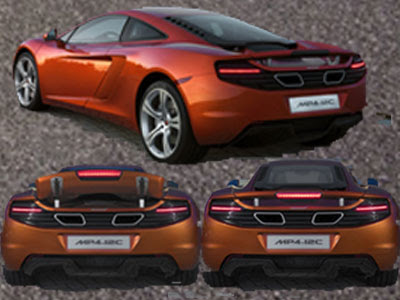
At its heart, the McLaren MP4-12C features a revolutionary carbon fibre chassis structure, the Carbon MonoCell: the first time a car in this market segment is based around such a strong and lightweight racing car engineering solution and the first time any car has ever featured a one-piece carbon fibre structure.
2011 McLaren MP4-12C

Martin Whitmarsh : "McLaren has for years offered a potent mix of race car and road car technologies. This combination of McLaren's performance heritage, and future demands on what is expected of high performance sports cars in the 21st century, gave us a head-start when we embarked on this project. The 12C, and future variants, draws on the spirit of Formula 1 and delivers real-world technological advances."
The first car from the new company, the McLaren MP4-12C, is a high performance two-seat mid-engine model in the 'core' sports car market segment for cars costing between £125,000 and £175,000.It goes on sale through a dedicated, worldwide retailer network in early 2011.
All the parts of the McLaren MP4-12C are bespoke and unique to this car. Everything from the engine right down to the tailor-made switches and buttons is pure McLaren: nothing has come from another manufacturer's parts bin.
The 12C is powered by a bespoke McLaren 'M838T' 3.8 litre, V8 twin-turbo engine producing around 600bhp, driving through a McLaren seven speed Seamless Shift dual clutch gearbox (SSG). It is targeting not only new standards for power and performance in its sector, but also class-leading fuel economy and CO2 emissions; supported by McLaren's experience of active aerodynamics to aid cooling, grip, handling and road holding.

2011 McLaren MP4-12C

"The 12C is all about performance," said Sheriff. "And in McLaren, we have a very broad definition of performance. We don't just look at the traditional one-dimensional parameters like top speed, we focus equally on useable measures such as in-gear acceleration times, braking performance in all conditions, and efficiency of power delivery combined with the lowest possible fuel consumption and CO2 emissions. Sure, 12C is very fast, but it is also the most efficient, most driveable high-performance sports car in the world.
Thorough engineering and market research led to concept development and a clear decision in favour of a mid-engined two door high performance sports car. Intensive work was carried out in the wind tunnel and the driving simulator to ensure that the new car would inherently have superb dynamic qualities.
The McLaren MP4-12C design follows similar principles to McLaren's Formula 1 cars, and the legendary McLaren F1, where everything is for a reason and all lines, surfaces, and details are designed with a job in mind as much as styled. This ensures that the 12C communicates its engineering through its styling and will remain timeless as a piece of automotive design.
"By the time the 12C is launched in 2011 we expect the economic conditions to be much improved. We have already seen significant interest in the car and the supply of the 12C will be relatively scarce; in its first year we plan to produce just 1,000 cars which represents only 3.5 per cent of the 'core' market," explained Antony Sheriff.
2011 McLaren MP4-12C

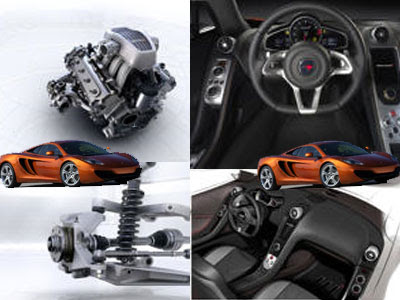
The McLaren MP4-12C is powered by a twin-turbocharged, 3.8 litre 90° V8 engine - the 'M838T'. This marks the start of a new era in 'core' segment sports cars - smaller capacity, lighter weight, higher efficiency and more economical power units. The engine has the highest specific power output in its segment which, when allied to its low weight carbon composite chassis, delivers exemplary power- and torque-to-weight ratios.The McLaren engine revs to 8,500rpm, has quick transient throttle response and delivers its abundant torque throughout the rev range. A staggering 80 per cent of torque is available at below 2,000rpm, ensuring great driveability and no need to floor the throttle to deliver performance.
The McLaren MP4-12C has been designed around a demanding mechanical package that puts emphasis on aerodynamics, compact dimensions, performance and efficiency, practicality and comfort. Although the design of the 12C was driven by aerodynamics, it aims to remain contemporary and elegant throughout its lifetime as well as distinctive among its peers.
"The 12C design was therefore led by aerodynamics. At McLaren we have been able to use the Formula 1 techniques and the huge expertise that the company has amassed at the pinnacle of the sport," explained Stephenson.
2011 McLaren MP4-12C

Aerodynamic efficiency drove the 12C's design. High downforce helps maintain traction, cornering ability and stability while low drag aids top speed and acceleration. It has a completely flat underbody and smooth upper body surfaces to yield a highly effective drag coefficient and generate very high levels of balanced downforce at high speed.

Related Posts Plugin for WordPress, Blogger...